Saturday, February 22, 2014

Coming Soon to the Resource Center - Early March 2014

Coming Soon to the Resource Center - Early March

Here are just a few of the books you can find in the church Resource Center in early March 2014 (All text copy from Goodreads):


Christianity is carrying a lot of baggage. Two thousand years of well-intended (and sometimes not so well-intended) attempts to carry forward the good news of God with us have resulted in some murky understandings of the teachings of Jesus and the culture of God's kingdom. To embrace Christianity, sometimes we have to repent of what we?ve made of it. InThe Unkingdom of God Mark Van Steenwyk explores the various ways we have failed our mission by embracing the ways of the world and advancing our own agendas. He shows us that the starting place of authentic Christian witness is repentance, and that while Jesus' kingdom is not of this world, it remains the only hope of the world.


Winner of a 2013 Leadership Journal Book Award ("Best of the Best" in "The Leader's Inner Life" category) Why bother with the Christian faith? In the post-Christian world, doubt and skepticism come naturally to us. Many have given up on faith of any kind, finding it shallow and unsatisfying. But still we yearn for more. We hope for our children's futures. We long for lives that are meaningful, even eternal. Grappling with his own questions, Jim Belcher set out on a quest to see how the Christian faith faces the challenges of the modern world and answers the cries of the human soul. Seeking renewal after a draining season of life, he and his family spent a year traveling through Europe, exploring the faith that has shaped civilizations throughout the centuries. They rediscovered key figures, places and events in the history of Christianity, from C. S. Lewis's life at Oxford to Dietrich Bonhoeffer's death in a concentration camp. Through the experiences of William Wilberforce, Vincent Van Gogh, Corrie ten Boom and others, Belcher saw glimpses of insight, beauty and courage that transcended human limitations. He found himself surprised by joy and compelled by faith. Whether you are giving up on Christianity or encountering it for the first time, you are invited to come along on this pilgrimage. Even if you are unsure of the destination, the journey itself may take you far deeper than you could ever imagine. 


Power corrupts—as we've seen time and time again. People too often abuse their power and play god in the lives of others. Shady politicians, corrupt executives and ego-filled media stars have made us suspicious of those who wield influence and authority. They too often breed injustice by participating in what the Bible calls idolatry. Yet power is also the means by which we bring life, create possibilities, offer hope and make human flourishing possible. This is "playing god" as it is meant to be. If we are to do God's work—fight injustice, bring peace, create beauty and allow the image of God to thrive in those around us—how are we to do these things if not by power? With his trademark clear-headed analysis, Andy Crouch unpacks the dynamics of power that either can make human flourishing possible or can destroy the image of God in people. While the effects of power are often very evident, he uncovers why power is frequently hidden. He considers not just its personal side but the important ways power develops and resides in institutions. Throughout Crouch offers fresh insights from key biblical passages, demonstrating how Scripture calls us to discipline our power. Wielding power need not distort us or others, but instead can be stewarded well. An essential book for all who would influence their world for the good.


"Look who gained the freshman fifteen," a family member teased when I returned home after a few months of college. . . . When I heard the words my mind decoded it like this: You. Are. Fat. Fat was not good. No, fat was bad. I would not be fat. I stood in front of the full-length mirror in my dorm room and inspected the extra parts. These extra parts needed fixing--my stomach, my thighs, and those cheeks that were round and puffy, like two big apples on the side of my face. I would fix this. Fixing was my forte. These were the thoughts that plagued Lee Blum during her teens and into her twenties.They drove her to an eating disorder and exercise addiction. Eventually, she found herself hospitalized with clinical depression. But that's not the end of the story: drawing strength from psychological, physiological and spiritual sources, she found her voice again. If you or someone you love has been at this dark table, you will find her story enlightening and encouraging.

Reading the Christian Spiritual Classics: A Guide for Evangelicals (2013) Jamin Goggin, Kyle Strobel, editors 

Ever since Richard Foster wrote Celebration of Discipline in 1978, evangelicals have hungered for a deeper and more historic spirituality. Many have come to discover the wealth of spiritual insight available in the Desert Fathers, the medieval mystics, German Pietism and other traditions. While these classics have been a source of life-changing renewal for many, still others are wary of these texts and the foreign theological traditions from which they come. The essays in this volume provide a guide for evangelicals to read the Christian spiritual classics. The contributions fall into four sections. The first three answer the big questions: why should we read the spiritual classics, what are these classics and how should we read them? The last section brings these questions together into a brief reading guide for each of the major traditions. Each essay not only explores the historical and theological context, but also expounds the appropriate hermeneutical framework and the significance for the church today. Together these essays provide a comprehensive and charitable introduction to the spiritual classics, suitable for both those who already embrace them and those who remain concerned and cautious. Whether you are a newcomer to historic spirituality or a seasoned reader looking to go deeper, you will find this volume to be a reliable resource for years to come.

More or Less: Choosing a Lifestyle of Excessive Generosity (2013) Jeff Shinabarger

In More or Less, Jeff Shinabarger calls readers to create their own social experiments to answer the question, “What is enough?” 

It all started with one idea: What would happen if we created a culture in which we gave away whatever was more than enough for us? How would our habits change if we shed the excess of money, clutter, and food in our lives? In More or Less, readers will learn how to draw a line of “enough” in their consumer choices, how to see generosity as a chance to experience freedom in a greedy world, and how to make small changes now that will help others forever. As Shinabarger reminds them, defining “enough” is more than a responsibility—it is an opportunity to give hope.


Few people are as qualified as James K. A. Smith to write a book on the interseection of faith and culture. Whenever he speaks, I listen. In this book, you’ll find winsome but profound essays on following Jesus in the 21st century. Read it and be challenged. - Jonathan Merritt, author of A Faith of Our Own: Following Jesus Beyond the Culture Wars


Romans 1-7 for You (2014) Timothy Keller

"Christianity is unique because it is about being saved through receiving a righteousness from God, rather than offering our own righteousness to God. In Romans, Paul wants us to understand and then experience this righteousness to know its glorious release." Join Dr Timothy Keller as he opens up the first half of the book of Romans, helping you to get to grips with its meaning and showing how it transforms our hearts and lives today.

Written for people of every age and stage, from enquirers to new believers to pastors and teachers, this flexible resource is for you to:

READ: As a guide to this letter which has changed history repeatedly, showing you how being right with God changes everything.

FEED: As a daily devotional to help you grow in Christ as you read and meditate on this portion of God's word.

LEAD: As notes to aid you in explaining, illustrating and applying Romans 1 7 as you preach or lead a Bible study.

Whoever you are, and however you use it, this is ROMANS.


One of the world's most trusted Bible scholars, N. T. Wright turns his attention to the central collection of prayers that Jesus and Paul knew best: the book of Psalms. Wright points out that the Psalms have served as the central prayer and hymnbook for the church since its beginning--until now. In The Case for the Psalms, Wright calls us to return to the Psalms as a steady, vital component of healthy Christian living.

Reading, studying, and praying the Psalms is God's means for teaching us what it means to be human: how to express our emotions and yearnings, how to reconcile our anger and our compassion, how to see our story in light of God's sweeping narrative of salvation. Wright provides the tools for understanding and incorporating these crucial verses into our own lives. His conclusion is simple: all Christians need to read, pray, sing, and live the Psalms.

Coffee with Jesus (2013) David J. Wilkie

One of Library Journal's "Best Books 2013" (spirituality/religion) Thousands of people start each day with a shot of Coffee with Jesus, the enormously popular online comic strip. Irreverent at times, yet always insightful, this volume features classic entries and all new, exclusive material that was born out of artist David Wilkie's frustration with the polarized political climate in America. "Originally created as a one-off, single-panel comic on my blog, utilizing old advertising clip art for the main characters and Sunday school clip art for the person of Jesus, I simply enjoyed the notion of Jesus appearing at table with these people (dressed as they were and sharing coffee with them) to refute their claims of how he might vote on any particular issue, to convince them that they cannot confuse their flag with their God--to set them straight, as it were," explains Wilkie. But it didn't stop here. Soon the Jesus of Coffee with Jesus could be seen offering counsel to a recurring cast of characters on their personal and work lives. The characters--Carl, Lisa, Ann, Kevin and Joe--all honestly engage with Jesus about their successes and failures and wants and needs, effectively showing what conversation with God--or prayer--might look like. Poignant, pointed, and rife with good theology, Coffee with Jesus is organized around six themes: getting to know Jesus, spiritual disciplines, relationships, culture, church, and the challenges of life. With exclusive material like twelve-panel mega-strips and "behind the strip" reflections on life, faith and art, Wilkie inventively poses answers to the perpetual Christian speculation, "What would Jesus do?"


Saturday, February 15, 2014

Coming Soon to the Resource Center - Late February 2014

Here are just a few of the books you can find in the church Resource Center in late February 2014 (All text copy from Goodreads):


Why is prayer so hard? Many of us have asked that question. We want to pray. We intend to pray. But, as spiritual director and professor MaryKate Morse notes, "We don't pray as consistently or as meaningfully as we might like." And yet prayer offers us such spiritual riches. 

This guidebook is designed to move you from lamenting over prayerlessness to the joy of praying. Whether you are a beginner or a lifetime person of faith, you will find a treasure trove of riches here to guide you into a deeper experience of prayer.


Life pulls us in many directions, sometimes even to the point of pulling our souls apart. We know rest and reflection are necessary for a healthy life—even Jesus took time to get away from the crowds, away from the demands of everyday life, to pray, to spend time with close friends, to sleep. 

But when Carolyn Weber—emotionally and physically exhausted from managing her career as a college professor, writing her first book and parenting three children under the age of three—hears this truth from a friend, all she can think is: but who will do everything if I don't? And this sets her on a journey to find the still, small space in each day. 

In these pages Carolyn reflects on the eternal beauty that lurks within the present. Drawing from literature, history and everyday life, Holy Is the Day is a collection of spiritual reflections that trace the way God's ever-renewing grace is a gift of the present. Opening it we find poignant stories of endurance, humility, compassion, remembrance and gratitude, as well a harrowing account of near-death experience. Carolyn gives us new eyes to receive the precious gift of the present and give it away to others.


When Christ calls people, he invites them on a journey--a journey taken together in community. We have reached a point in history, however, when we think of the church as a fixed place where isolated individuals show up, consume a Christian message, drink some coffee, and get on with their lives. The times demand, and the gospel proclaims, that we recover our identity as a church that is a people on a quest for the kingdom of heaven, formed intimately by a loving God and called onto a long journey for the sake of our neighbors and our world. InThe Missional Quest you?ll learn how to take your church on a long run, and how to sustain yourselves and one another along the way, through the power of God for the sake of the world.


The Pilgrims' celebration of the first Thanksgiving is a keystone of America's national and spiritual identity. But is what we've been taught about them or their harvest feast what actually happened? And if not, what difference does it make? Through the captivating story of the birth of this quintessentially American holiday, veteran historian Tracy McKenzie helps us to better understand the tale of America's origins—and for Christians, to grasp the significance of this story and those like it. McKenzie avoids both idolizing and demonizing the Pilgrims, and calls us to love and learn from our flawed yet fascinating forebears. The First Thanksgiving is narrative history at its best, and promises to be an indispensable guide to the interplay of historical thinking and Christian reflection on the meaning of the past for the present.


When pastor David Beck went to Haiti with a ministry team he found himself deeply experiencing the power of being Christ's own hands and feet. Reflecting on what it means to be Christ to others, he writes: "We come to fulfill Jesus' words that we are the light of the world and are here to let our light shine so others will glorify God (Mt 5:14-16). God intends for his children to be luminous." But how do we get there? Through both personal and spiritual reflection, this book explores the formational practices of those who long to become the embodiment of Christ to the world around them--who long to be what Jesus declared them to be: the light of the world.


Monday, February 3, 2014

Resources on Meditation - Coming Soon to the Resource Center

A few weeks ago, Pastor Brian recommended three resources on meditation. Those three books just came in and should be available soon at the church Resource Center. 


Contemplative Bible Reading - Richard Peace


Contemplating the Cross - Tricia McCary Rhodes

Tuesday, January 21, 2014

The Best Christian Books of 2013

Things have been very busy, so I’m just now getting to my Best Christian Books of 2013. Some qualifiers: 

All the works are non-fiction.

The books were read - but not necessarily published - in 2013. 

I believe all of these books can be found in the SPEP Resource Center. (If you find that any of them are not, please let me know.)

I hope you find something on this list that will encourage, challenge, edify and strengthen you on your Christian walk. My Top 12 in alphabetical order by author’s last name:


The Secret Thoughts of an Unlikely Convert: An English Professor's Journey Into Christian Faith (2012) Rosaria Champagne Butterfield

The story of a former tenured professor of English at Syracuse University and her conversion to Christianity is an excellent, intelligent read, but may contain perhaps a bit too much of an emphasis on the Reformed Presbyterian Church of North America for some readers. Overall an excellent memoir. 


Almost Christian: What the Faith of Our Teenagers is Telling the American Church (2010) Kenda Creasy Dean

Dean’s book is based on the 2003-2005 National Study of Youth and Religion, examining why many American teens profess Christianity, yet seem so apathetic about it in their lives. Oxford University Press seems an odd publisher for this book, and the work does come across as somewhat academic at times, yet Dean fills each chapter with practical information as well as suggestions for prayerfully turning things around. 

Her strongest theme throughout is the concept of building “behind the wall” conversations with teens. The idea comes from 2 Kings 18-19, which recounts Jerusalem being surrounded by the Assyrians. The Assyrian negotiator taunts Israel and God while Israel’s leaders are behind the wall, having conversations with God’s people, reminding them of who God is and His faithfulness to them. 

Almost Christian is an essential read for youth leaders, church leaders, pastors and parents. 


Crazy Busy: A (Mercifully) Short Book about a (Really) Big Problem (2013) Kevin DeYoung

If you feel like you don’t have time to read this book, you really should read this book! You may be surprised at some of the root causes of our busyness and the biblical solutions DeYoung offers in this short, excellent work. 


Schaeffer on the Christian Life: Countercultural Spirituality (2013) William Edgar

(This work is part of the Theologians on the Christian Life series which also includes works on Dietrich Bonhoeffer, John Wesley and an upcoming volume on John Calvin.)

Francis Schaeffer was a giant of Christian thinking in the 20th century, but reading his work can be a challenge. Producing any introductory work on Schaeffer is no easy task, but Edgar does a fine job of giving an overview of Schaeffer’s life and work.  Please read more.  


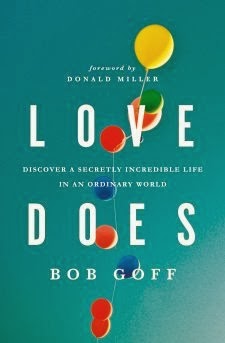
Love Does: Discover a Secretly Incredible Life in an Ordinary World (2012) Bob Goff

A very simple, easy-to-read book that will change how you look at your spiritual life. Goff’s book may be a light, quick, often humorous hilarious read, but there’s a wealth of wisdom within its pages. Regardless of what we’ve been led to believe by the culture, love isn’t primarily about thoughts and feelings; it’s about doing. Here’s a book you can read in a day, but its lessons will stay with you for a lifetime. 


Meaning at the Movies: Becoming a Discerning Viewer (2010) Grant Horner

You don’t have to be a movie fanatic (like me) to enjoy and learn from this book. Horner spends a good chunk of his introduction discussing movies, the concept of truth, the nature of our culture, and the authority of Scripture. This is essential for appreciating what he has to say about film and worldview. Meaning at the Movies has now become my “go-to” book on film and the Christian worldview. 


Love Into Light: The Gospel, the Homosexual and the Church (2013) Peter Hubbard

I’ve read a few books on homosexuality and Christianity and perused several others. Most are not worth your time, but Hubbard’s short book manages to convey biblical truth with grace, gentleness and respect. Highly recommended.


The Meaning of Marriage: Facing the Complexities of Commitment with the Wisdom of God (2011) Timothy Keller

Putting a Tim Keller book on your Best of the Year list is a no-brainer. Essential reading for anyone, whether you’re married or not. 


Reverberation: How God’s Word Brings Light, Freedom, and Action to His People (2011) Jonathan Leeman


The Returning King: A Guide to the Book of Revelation (2000) Vern S. Poythress

Some writers and commentators avoid the Book of Revelation. Not Poythress. Please read more.   


Sex & Money: Pleasures That Leave You Empty and Grace That Satisfies (2013) Paul David Tripp

“Pleasure. We live in a world obsessed with finding it, passionate about enjoying it, and desperate about maintaining it. Chief among such objects of affection are sex and money--two pleasures unequaled in their power to captivate our attention and demand our worship. In what is sure to become an instant classic, popular author Paul David Tripp pulls back the curtain on the lies of our flesh and the ways we distort God's good gifts, examining the insanity of our culture and exposing our tendency to fall prey to the hollow promises of this world. In exploring how God's grace frees us from futile pursuits, Tripp directs readers to the wisdom of God in Scripture and the liberating power of the gospel, offering practical guidance on finding true joy and enduring satisfaction.” (Goodreads)


Sexual Sanity for Men: Re-Creating Your Mind in a Crazy Culture (2012) David White 


And also let me know what you read and enjoyed in 2013! 


Sunday, October 27, 2013

Coming to the Resource Center Early November


A Public Faith: How Followers of Christ Should Serve the Common Good (2011) Miroslav Volf

Debates rage today about the role of religions in public life. As the world becomes increasingly interconnected, various religions come to inhabit the same space. But how do they live together, especially when each wants to shape the public realm according to the dictates of its own sacred texts and traditions? How does the Christian faith relate in the religious pluralism of contemporary public life? 
While Volf argues that there is no single way Christian faith relates to culture as a whole, he explores major issues on the frontlines of faith today: 1) In what way does the Christian faith come to malfunction in the contemporary world, and how should we counter these malfunctions? 2) What should a Christian's main concern be when it comes to living well in the world today? and 3) How should we go about realizing a vision for human flourishing in relation to other faiths and under the roof of a single state? 
Covering such timely issues as witness in a multifaith society and political engagement in a pluralistic world, this compelling book highlights things Christians can do to serve the common good.


Mistakes Leaders Make (2012) Dave Kraft
Anyone involved in leadership knows that it's tough and mistakes are bound to happen. But some mistakes are more costly than others and can result in the end of effectiveness, the loss of important relationships, and disqualification from ministry.

Using the story of a fictitious church team to demonstrate the problems, principles, and practice of finding solutions, leadership expert Dave Kraft uncovers the top 10 critical mistakes leaders make and shows you how to avoid them so you can have ministry and relationships that last.


Business for the Glory of God: The Bible’s Teaching on the Moral Goodness of Business (2012) Wayne Grudem

Can business glorify God? We normally think of worship, faith,
evangelism, and other "spiritual" activities as glorifying to God,
but business? Wayne Grudem believes that by engaging in work and business we glorify God because we are emulating God's own creative work. This book is a thoughtful guide to imitating God during interactions with customers, coworkers, employees, and other businesses.

Meaning at the Movies: Becoming a Discerning Viewer (2010) Grant Horner

Hollywood produces, packages, and sells hundreds of movies every year. Many of these movies propagate a distorted sense of morality and ethics. Under the surface of immoral behavior and unlawfulness, however, there can be deeper problems in Hollywood's messages. What are these stories telling the viewer about life, relationships, and God? What worldviews and ideas do they espouse? If Christians are to tread carefully at the theater complex, they need resources to help them.

This book is just such a resource. By exploring the relationship between Christianity and art, the theology of biblical discernment, and a brief history of filmmaking, as well as through analysis of popular films, Meaning at the Movies equips readers for careful discernment in the cinema. The book does not simply list criteria for judging film art; instead it encourages Christians to develop biblical and critical discernment in regard to not only film, but all aspects of culture.


Walking with God through Pain and Suffering (2013) Timothy Keller

Walking with God through Pain and Suffering is the definitive Christian book on why bad things happen and how we should respond to them. The question of why there is pain and suffering in the world has confounded every generation; yet there has not been a major book from a Christian perspective exploring why they exist for many years.

The two classics in this area are When Bad Things Happen to Good People by Rabbi Harold S. Kushner, which was published more than thirty years ago, and C. S. Lewis’s The Problem of Pain, published more than seventy years ago. The great secular book on the subject, Elisabeth Ku¨bler-Ross’s On Death and Dying, was first published in 1969. It’s time for a new understanding and perspective, and who better to tackle this complex subject than Timothy Keller?

As the pastor of Redeemer Presbyterian Church in Manhattan, Timothy Keller is known for the unique insights he shares, and his series of books has guided countless readers in their spiritual journeys. Walking with God through Pain and Suffering will bring a much-needed, fresh viewpoint on this important issue.

Sunday, October 20, 2013

Coming to the Resource Center Late October


C.S. Lewis: A Life: Eccentric Genius. Reluctant Prophet. (2013) Alister McGrath

"McGrath's new biography of C.S. Lewis is excellent. It's filled with information based on extensive scholarship but is nonetheless extremely readable. It not only devotes great attention to the formation and character of Lewis, it offers incisive and balanced analyses of all his main literary works. I devoured Lewis's works in my youth. His impact on me was so profound and lasting, and McGrath clearly explains why so many can say the same thing." - Timothy Keller


The Screwtape Letters (1942) C.S. Lewis

This classic has entertained and enlightened readers the world over with its sly and ironic portrayal of human life and foibles from the vantage point of Screwtape, a highly placed assistant to "Our Father Below." At once wildly comic, deadly serious, and strikingly original, C.S. Lewis give us the correspondence of the worldly-wise old devil to his nephew Wormwood, a novice demon in charge of securing the damnation of an ordinary young man. The Screwtape Letters is the most engaging account of temptation - and triumph over it - ever written. (from the publisher)


One Thousand Gifts: A Dare to Live Fully Right Where You Are (2010) Ann Voskamp

One Thousand Gifts beckons you to leave the parched ground of pride, fear, and white-knuckle control and abandon yourself to the God who overflows your cup. As Ann Voskamp invites you into her own moments of grace, she gently teaches you how to biblically lament loss, turning pain into poetry; intentionally embrace a lifestyle of radical gratitude; and slow down and catch God in the moment. (from the publisher)


The Seven Sayings of the Saviour on the Cross (1918) A.W. Pink

The words Christ spoke from the cross can inform Christians of the purpose, the meaning, the sufferings, and the sufficiency of his death. After an introduction that discusses the nature of Christ's death as natural, unnatural, preternatural, and supernatural, Dr. Arthur W. Pink clearly illustrates the lessons that can be drawn from Christ's words-lessons on forgiveness, salvation, affection, anguish, suffering, victory, and contentment. (Goodreads)

Sunday, October 13, 2013

Coming to the Resource Center Mid-October


Crazy Busy: A (Mercifully) Short Book About a (Really) Big Problem (2013) Kevin DeYoung

Kevin DeYoung addresses the busyness problem head on in his newest book - and not with the typical arsenal of time-management tips, but with the biblical tools we need to get to the source of the issue and pull the problem out by its roots. Highly practical and super short, Crazy Busy puts an end to "busyness as usual."


Word Versus Deed: Resetting the Scales to a Biblical Balance (2012) Duane Litfin

"Provides a wholly biblical answer that establishes the full primacy of proclamation together with the role of deeds in demonstrating the gospel to a watching world - utterly compelling." - R. Kent Hughes, Senior Pastor Emeritus, College Church, Wheaton, Illinois


Welcome to the Story: Reading, Loving, & Living God's Word (2011) Stephen J. Nichols

Stephen NIchols helps us to experience the story and get more out of God's Word. Here is a book that invites you to enter, to participate, and to truly appreciate the very story of God.


And a couple of DVD series:


Westminster Conference on Science & Faith: God and Materialism (2011)

What is the scientific evidence for a materialistic worldview? Does materialism help or hinder the operation of good science? And what impact has materialism had on culture, including Biblical studies and theology? Speakers include professor Vern Poythress, astronomer Guillermo Gonzalez, biologist Jonathan Wells and many more. 10 hours on 3 DVDs. 


Westminster Conference on Science & Faith: Science, Human Origins, & Human Dignity (2012) 

Does modern biology support or undercut human uniqueness? What does it really mean to be "created in the image of God?" And what are the social and ethical implications of our view of the human person? Speakers include psychologist Edward Welch, biologists Richard Sternberg and Ann Gauger, political scientist John West, theologian Vern Poythress and more. 12 hours on 4 DVDs.